

Permit Me to Restore
Why does it take so much paperwork to restore nature?

Today, we’re joined by Danielle Bissett, EPIC’s Assistant Director of Restoration Policy and a Certified Ecological Restoration Practitioner. While Permit Me to Explain tends to focus on improving permitting of infrastructure projects, in this piece, Danielle makes the argument for reforming the way we permit ecological restoration projects. She argues our environmental laws are at odds with restoration and that we need to rethink how we review these projects, which include reforms like exemptions, exclusions, or, at a minimum, a streamlined, consolidated review process.
I spent a decade working as an ecological restoration practitioner in New York. Permitting made me quit, and now, my job is to improve permitting to accelerate ecological restoration efforts across America.

I made the switch from practitioner to policy-maker because permitting requirements for restoration were incredibly disheartening and frustrating. I kept expecting to have a big “aha” moment: oh, this is why we do it this way — it’s a well-thought-out plan. That moment never came, and, if anything, I’ve become more dumbfounded by the status quo.
The main problem is that the permitting system we built and have added to over the last 50 years was designed to reduce or prevent harm from unchecked development and industrial pollution. That logic makes sense when someone might ask to destroy a wetland to build a parking lot. But it makes absolutely no sense when you’re trying to restore a wetland that needs some help or bring oysters back to an estuary to filter water and create habitat. We need faster permitting for restoration.
Endangered Species Act (ESA): When protecting species blocks restoring their habitat
Here is one place where I get frustrated.
If habitat destruction and degradation are what drove endangered species toward extinction, then why does restoration, which would rebuild that habitat, be viewed so negatively under the law?
I know I’m painting in broad strokes here and that there are technical nuances that I’m not touching on, but why is restoration characterized as “habitat conversion” or “incidental take”?
I’ve seen plenty of answers to these questions, but they don’t make sense to me when it comes to viewing restoration as a negative rather than a tool for multi-species recovery. And I’ve spoken with many restoration practitioners, conservationists, and regulators about ESA that share this same fundamental tension.
Here is an easy example. Oyster reef restoration is all the buzz — they’re a keystone species AND an ecosystem engineer. You get a big bang for your restoration buck when you focus on restoring this powerhouse species.
So why does it take so long to permit oyster reef restoration? A big part of the answer is habitat conversion, because if there is an endangered species that overlaps with your project site, you’re going to have a lot of explaining to do. I understand the need to check, we don’t want blind approvals, but this seems excessive. For this example, I think we can do better because Atlantic Sturgeon will appreciate more hard substrate — they like eating many of the species found on and around oyster reefs. So, how can we better align the ESA and ecological restoration?
National Historic Preservation Act (NHPA): Dams and what we actually value
The NHPA provides that any structure over 50 years old is eligible to be considered historically significant, and if deemed so, can be preserved and protected.1 As a result, much of America’s built infrastructure can be preserved under NHPA, and that includes dams.
Dams are interesting because we built a lot of them, hundreds of thousands of them in fact, across the U.S. between the 1600s and 1800s. These were built primarily to provide mechanical power and electricity for industry (e.g., mills). Now, hundreds of years later, around 80% of total dams in the U.S. do not serve any purpose – they’re not generating hydropower (3%) or providing flood control (17%).2 Most are in poor condition, aren’t being maintained properly, and in many cases are structurally unsafe or even falling apart. These issues pose real public safety risks, especially since flooding events are becoming more powerful and more frequent. The other issue with obsolete dams is that they’re extremely harmful to rivers.
When you remove a dam (properly), you immediately restore river function, making it a very powerful tool for public safety and ecological restoration. Also, the photos before, during, and after are incredible. If you haven’t watched a time-lapse video of a dam removal, this is your cue to do so. American Rivers, Trout Unlimited, and the Open Rivers Fund are leading the charge on removing these harmful dams. Unfortunately, permitting is a major bottleneck. To be clear, there are many permitting hurdles slowing down dam removal, but we’re going to focus on the NHPA.
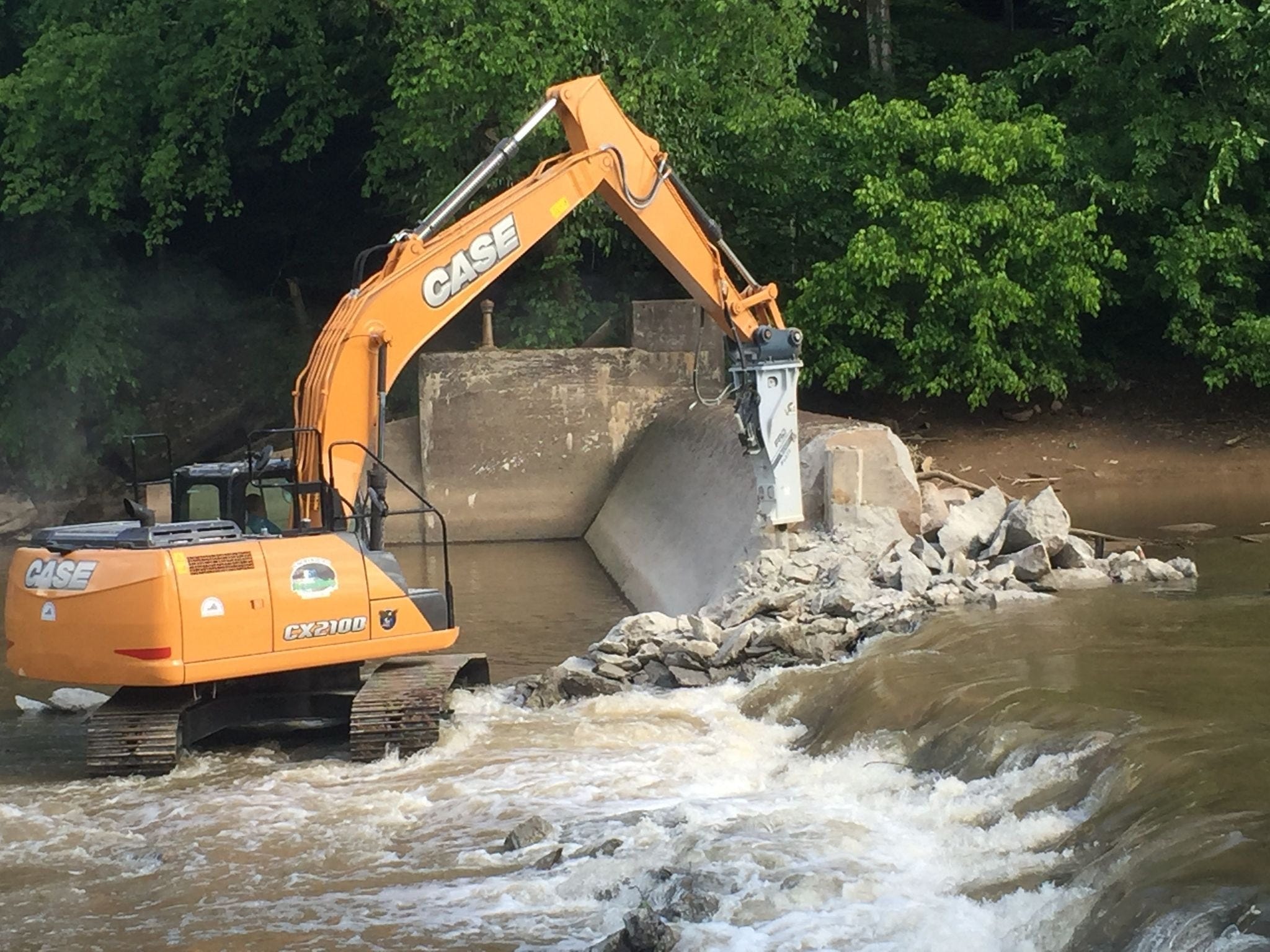
Given that we built dams at a time of basically no permitting laws, it amazes me how hard it is to remove them. Despite the public safety and ecological benefits, some people think dams are worth preserving, and because of the NHPA, they have a powerful tool for slowing down or blocking removal.3 However, there is growing pushback on this point from professionals, community members, and tribes. And we’re seeing success. The U.S. Army Corps recently adopted a new Nationwide Permit for Fish Passage Projects, while large-scale dam removals are underway in major watersheds, including the Klamath, Penobscot, and Elwha. In short, the NHPA allows us to place greater value on man-made and obsolete structures that are a few hundred years old over rivers that have existed for millennia. We need to change this!
Clean Water Act (CWA): The “fill” definition that fills me with despair
This might be the regulation that makes the least sense to me.
Under EPA’s definition, “fill material” is any material placed in waters of the U.S. that replaces a portion of those waters with dry land or changes the bottom elevation. The CWA’s Section 404 program is built around the premise that no discharge of dredged or fill material should be permitted if a less-damaging alternative exists, or if it would significantly degrade the nation’s waters.
That logic, again, makes sense for reducing harm from development, but why does it also regulate restoration?
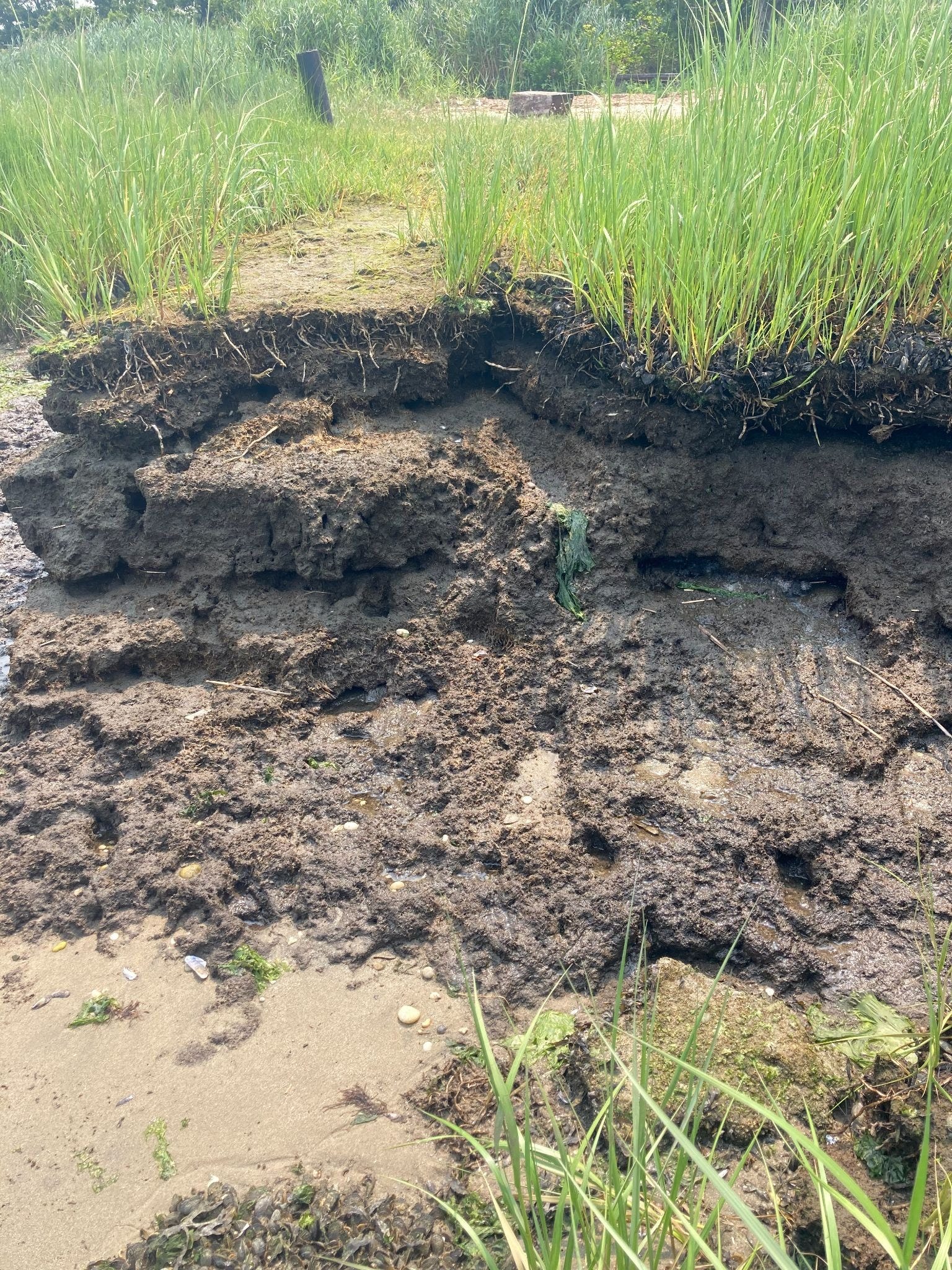
Across the country, practitioners are restoring wetlands by filling in old drainage ditches with sediment. These ditches were haphazardly constructed decades ago to manage mosquito populations, and most actively undermine wetlands by increasing erosion and draining water too quickly. Filling in these ditches is the ecologically correct move.
However, many regulators often classify these man-made ditches as navigable waterways under the Rivers and Harbors Act and fish habitat under the ESA. Some regulators will actually require compensatory mitigation because the practitioner is technically “filling” and converting habitat. We built these ditches — they are not natural streams! So what are we protecting and why? A man-made ditch or an actual wetland? Are we willing to lose the wetland because we don’t want to fill in the ditches we dug?
Our inability to act quickly enough means that by the time we do approve these restoration projects, there’s so much more degradation to reverse that the project itself becomes a bigger lift with more area to fill, which creates even more regulatory friction. Restoration needs to be exempted from the “fill” definition. If we want ecosystems to recover, practitioners need to be able to actually touch them, change conditions, and convert existing degraded habitat into something functional.
The Good News: Some states aren’t waiting
Permitting reform momentum is building across the country, and restoration needs to be part of that conversation. Here are three examples of states that have moved in the right direction, but at EPIC, we think even more permitting exemptions and exclusions need to be applied to restoration:
Colorado enacted a state dredge-and-fill law that explicitly exempts and excludes eligible voluntary stream restoration projects from its requirements.
California created a Statutory Exemption for Restoration Projects (SERP) under the California Environmental Quality Act (CEQA).
Washington piloted the Habitat Recovery Pilot Program, which created a streamlined, consolidated pathway for restoration, including exempting projects from the State Environmental Quality Act. The program has since expired, but advocates and policymakers are actively working to make it a permanent program because it works.
These are highly regulated states, and these policy solutions are exactly the kind of state-level leadership that should be studied, replicated, and scaled across the country.
A note on poorly-designed projects
I can already hear the counterargument: “But what about bad restoration projects? What about ones that actually cause harm?” It’s a fair question, and I’m not arguing for zero oversight; there needs to be a quality check. So the question isn’t whether quality control matters — it’s whether permitting is the right mechanism. Surprise, I don’t think permitting is the right mechanism, and I think we can and must do better.
The conversation is already shifting. More and more practitioners, policymakers, and advocates are stepping up to name the problem, question the status quo, and call for something new. So let’s make sure we’re ready to add smart permitting recommendations to the conversation that help accelerate restoration efforts.
Please reach out to me if you have any questions, ideas, or restoration stories you’d like to share that help us develop innovative policy solutions that work for people and the planet – dbissett@policyinnovation.org.
NHPA and SHPO (State Historic Preservation Office) are essentially the same thing; NHPA requires all states to have a SHPO to administer preservation programs.
For dams that provide electricity or flood control, these types of dams still serve a purpose and are properly maintained to ensure they’re safe. This is where fish ladders make sense, and some people might think fish ladders are an easy solution for all types of dams, but I worked on two fish ladders: one for river herring and another for American eels. They’re very limited and are designed for specific species, but are an option for dams that have a purpose and should not be removed (e.g., hydroelectric dams, flood control). However, for obsolete dams, they’re not a long-term solution, they’re a bandaid on a fatal wound.
Dams have become such a normalized piece of infrastructure because, considering our lifespans, most of us don’t know what a natural river looks like. So I can understand why some people would want to protect an obsolete dam – this is where they swim or fish, this is the environment in which they grew up – and the NHPA and SHPO provides them with a means to protect them. However, when a dam that hasn’t served a function in over a century that is blocking fish passage, contributing to flood risk, and degrading a river every single day, the question of what we value becomes impossible to avoid. Why do we value a 150 year old dam more than restoring a river that’s existed for millions of years?
 | A guest post by
|